
Dear Ma,
I have been thinking about something that happened in the Philippines.
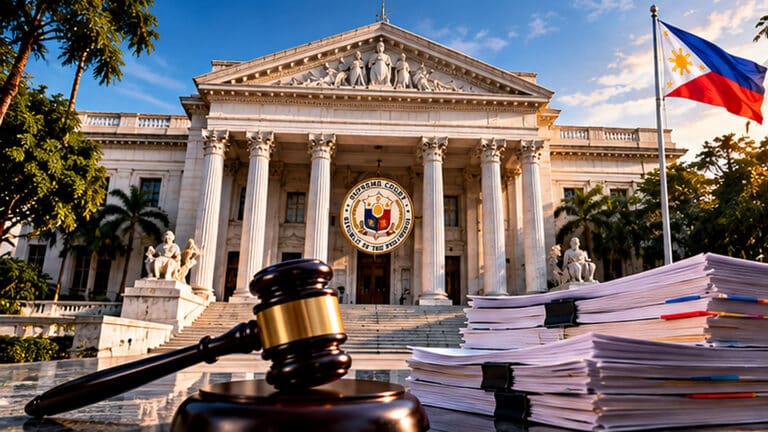
The Supreme Court declared the national budgets for 2024 and 2025 unconstitutional.
When I first read about it, I thought about how complicated those enormous amounts of money must seem to ordinary people.
Billions of pesos. Unprogrammed appropriations. Special funds. Constitutional limits.
Words that belong to government offices, legislative debates, and courtrooms.
But behind those words are ordinary families.
And perhaps that is why I wanted to write to you about it.
The Numbers Are Huge, but Our Needs Are Simple
Ma, when politicians discuss billions of pesos, it can be difficult to imagine what those numbers really mean.
Most families are not asking for complicated things.
They want their children to receive a decent education.
They want access to healthcare when someone becomes ill.
They want safe roads, reliable public services, and opportunities to earn enough to live with dignity.
These may sound like ordinary expectations.
But perhaps ordinary expectations are exactly what public service should take seriously.
The national budget is not an abstract political document.
It determines how the government is authorized to spend resources that should serve the public.
And when questions arise about how those resources were approved, people deserve clear explanations.
Public Money and Filipino Families
One thing I keep coming back to is the difference between what public money means to a government and what money means to an ordinary family.
For a government, a billion pesos might appear as a line in a financial document.
For a family, every peso must often be accounted for.
There are groceries to buy, school expenses to prepare for, medical bills to consider, and responsibilities that cannot simply be postponed.
For people working abroad, these responsibilities may continue across borders.
Some Filipinos earn a living thousands of miles from home while helping support families in the Philippines.
That does not mean remittances directly fund the government’s budget in the same way taxes and other government revenues do.
But it does mean overseas Filipinos remain deeply connected to the everyday realities of the people who depend on Philippine public services.
I think that connection deserves more recognition.
When Leaders Disagree, Where Should We Look for the Truth?
Former President Rodrigo Duterte had questioned the legality of the 2025 national budget.
Vice President Sara Duterte had raised concerns about how appropriations were handled.
The Marcos administration disputed some of those earlier allegations.
Then came the Supreme Court ruling.
It would be easy to turn everything into a contest between political families.
Who warned first? Who was right? Who should be blamed?
Those questions may attract attention.
But I think there is a more important responsibility: to understand what the Court actually decided, what the available records prove, and what remains unresolved.
An unconstitutional budget does not automatically prove that every official involved stole money.
At the same time, the absence of a criminal finding does not make constitutional violations unimportant.
Ma, perhaps accountability begins by refusing to confuse accusations with evidence.
We should demand answers without deciding guilt before the facts are established.
The Cost of Losing Trust
I wonder what happens when ordinary people begin to believe that the rules are followed strictly by some but treated flexibly by others.
What happens when families are expected to manage their limited incomes responsibly while questions remain about how billions in public spending were authorized?
Trust is difficult to measure.
It does not appear as a line item in the national budget.
Yet it influences how people view government institutions, public services, and the future of their country.
I do not think trust requires believing that every public official is always right.
Quite the opposite.
Trust becomes meaningful when institutions can acknowledge errors, explain decisions, correct violations, and hold people accountable through fair procedures.
A functioning system should not depend on everyone agreeing with one political leader.
It should depend on rules that apply regardless of who occupies the position.
Maybe the People Should Always Come First
Ma, I know that a court ruling cannot solve every problem.
It cannot immediately improve a hospital, repair a road, or make life easier for a struggling family.
But it can remind the country that the process of spending public money matters.
Rules are not merely obstacles to government action.
They exist because public power must have limits.
And public resources are entrusted to institutions for purposes larger than the ambitions of the people who temporarily lead them.
Perhaps that is what I hope people remember as the arguments continue.
The national budget is not simply a document for politicians to debate.
Its consequences reach people who may never enter a government building or read a court decision.
People who only want their children to have opportunities.
People who work hard and hope their contributions to society mean something.
People who deserve a government that can explain how it handles the money entrusted to it.
I do not know how every remaining legal question will be resolved, Ma.
But I hope the discussion does not end with political accusations and counteraccusations.
I hope it leads to clearer records, better safeguards, and accountability based on evidence.
Because in the end, the people affected by government decisions deserve more than another argument.
They deserve to know that their future matters.
Love,
Your son.
Editorial context: This personal reflection refers to the Philippine Supreme Court’s October 2026 budget ruling. It is an essay expressing questions and values, not an accusation that an identifiable person committed a crime.
Factual background: 1987 Philippine Constitution · Supreme Court ruling coverage · Government response